

Mezzanine vs warehouse expansion vs relocation: the 2026 cost comparison
New warehouse construction runs $85–200/sq ft in 2026; a mezzanine adds floor space for $50–150/sq ft in weeks, not months. The honest three-way comparison with sourced numbers.
Editorial & Engineering Team
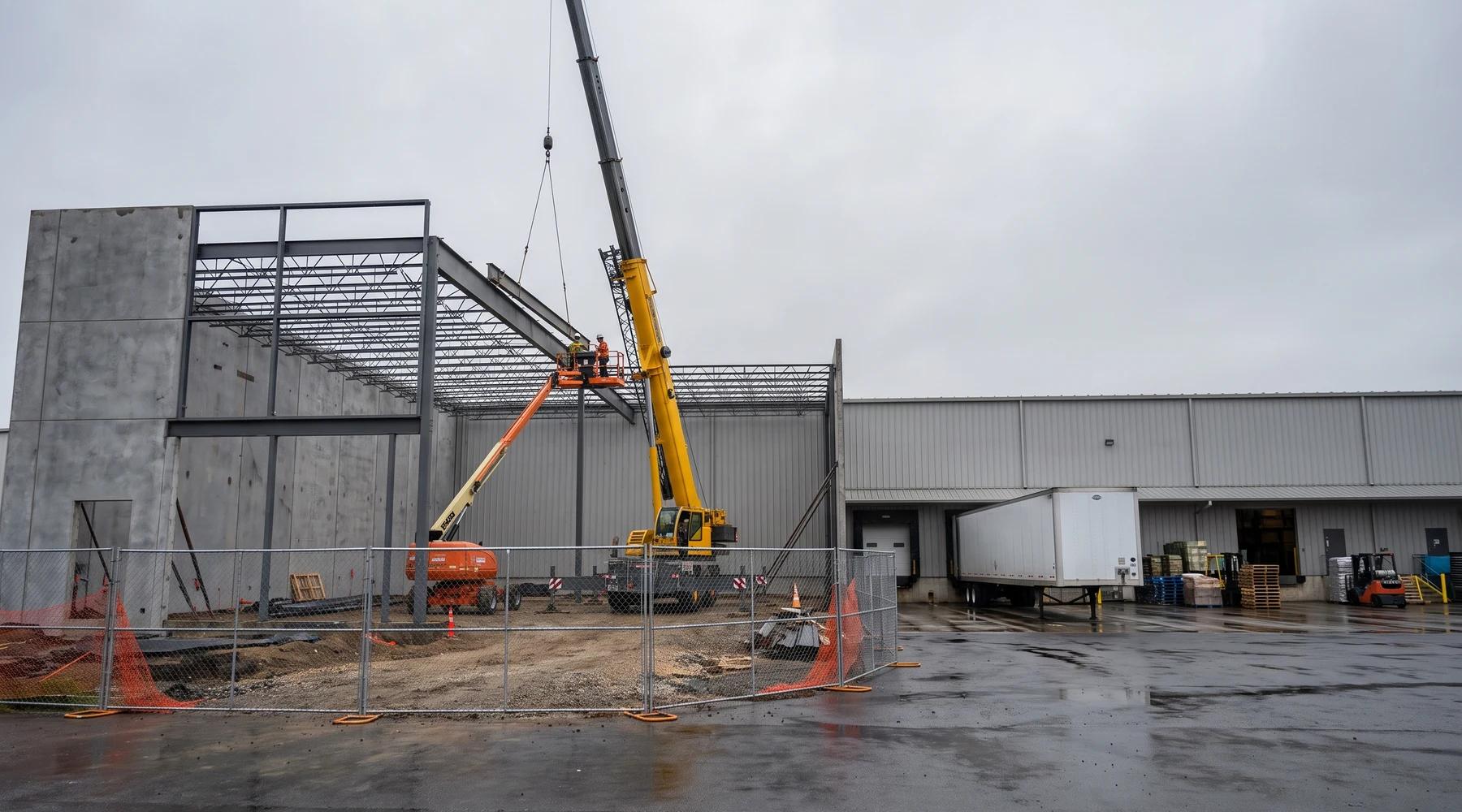
When a facility runs out of floor, there are exactly three ways to buy space: build more building, move to a bigger one, or use the height you already own. In 2026 the published numbers are lopsided: construction costs $85–200 per square foot and takes 6–18 months; a mezzanine adds floor at $50–150 per square foot in 2–6 weeks. But the cheap option isn't always the right one — this is the honest three-way comparison.
What does warehouse construction cost in 2026?
Turnkey warehouse construction runs $85–200 per square foot nationally, with strong economies of scale. The published size curve (Brown Integrated Logistics, 2026):
| Building size | Turnkey cost/sq ft |
|---|---|
| 10,000–20,000 sq ft | ~$140 |
| 30,000–50,000 sq ft | $85–100 |
| 100,000+ sq ft | $60–80 |
Cushman & Wakefield's Industrial Construction Cost Guide shows the same shape from the institutional side: $139/sq ft average for a small (~109,000 sq ft) ground-up build, $77–85 for large ones. Structure-only numbers are lower — pre-engineered metal buildings are published anywhere from $14–30 to $20–35 per square foot depending on the source — but a shell isn't usable space; sitework, docks, fire protection, and fit-out are what get you to turnkey.
Two more published realities: regional markets swing the number ±25–50% (California, New York, and the Pacific Northwest run +25–40%), and costs keep climbing — Turner's index rose 4.87% and Mortenson's 6.77% year-over-year as of Q1 2026. Timeline: 6–12 months for small-to-mid builds, 12–24 months for a typical full cycle.
An expansion (addition) prices like new construction — no major source publishes a separate "addition" rate — but it adds demolition/tie-in work at the shared wall and months of construction disruption alongside an operating facility.
What does relocating actually cost?
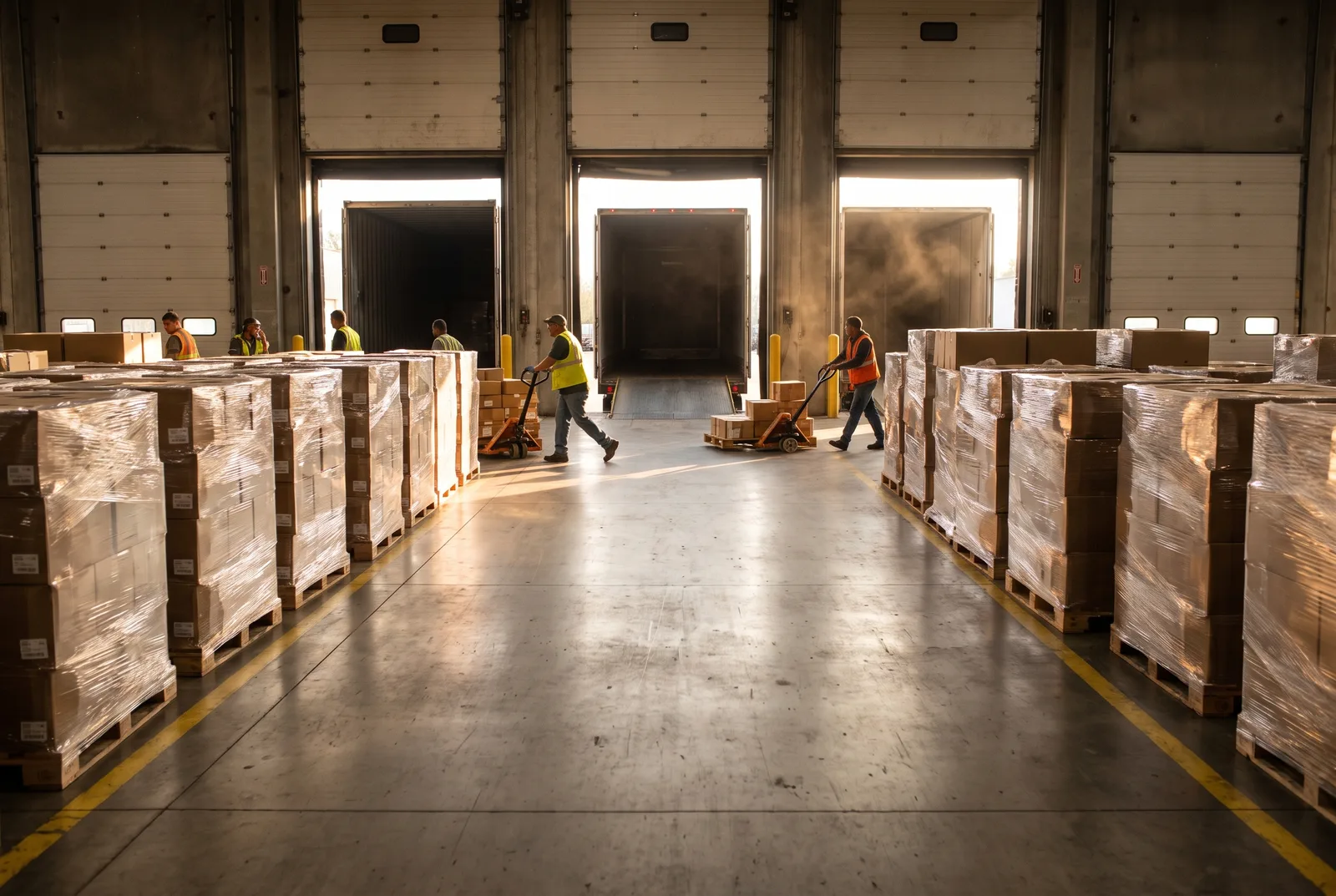
The move itself is the small part: $25,000–$100,000 for a typical warehouse relocation. That's the published range (Meyer; Move Solutions puts large multi-floor facilities at $15,000–100,000+). The bigger numbers hide elsewhere:
- Fit-out at the new space: industrial tenant improvements typically run $15–30 per square foot beyond any landlord allowance.
- The ongoing lease itself: national industrial asking rents span $10.18–$11.08 per sq ft per year across the Q1 2026 Cushman & Wakefield, JLL, and CBRE reports (methodologies differ — treat it as a band). Port markets run ~55% above average.
- The unquantified line: downtime, double-handling inventory, re-permitting, address changes, and the employees who don't follow you to the new building.
How does a mezzanine compare?
Published head-to-head figures put a mezzanine at 50–70% less than a building expansion, delivered in weeks instead of months. The 50–70% figure comes from Cogan's published comparison (2026) — Cogan is this site's publisher, a relationship we disclose here — and it counts the full expansion stack: foundations, roofing, HVAC, electrical, permitting, and lost productivity. Independent component-maker PWI published the same directional math back in 2021: roughly $25/sq ft for mezzanine space versus $55–70 for new construction at the time — a 40,000 sq ft example penciling at ~$1.0M versus ~$2.5M.
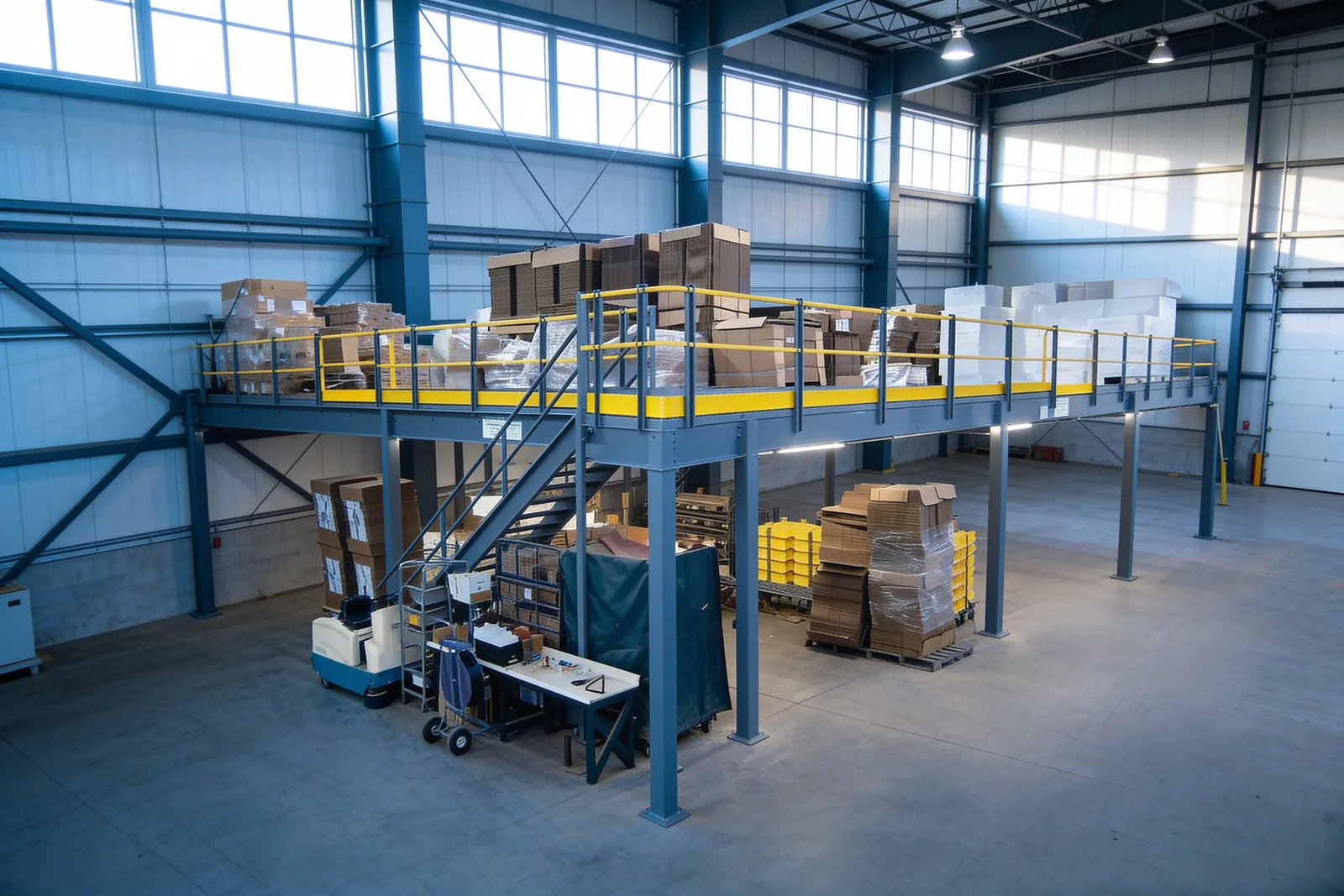
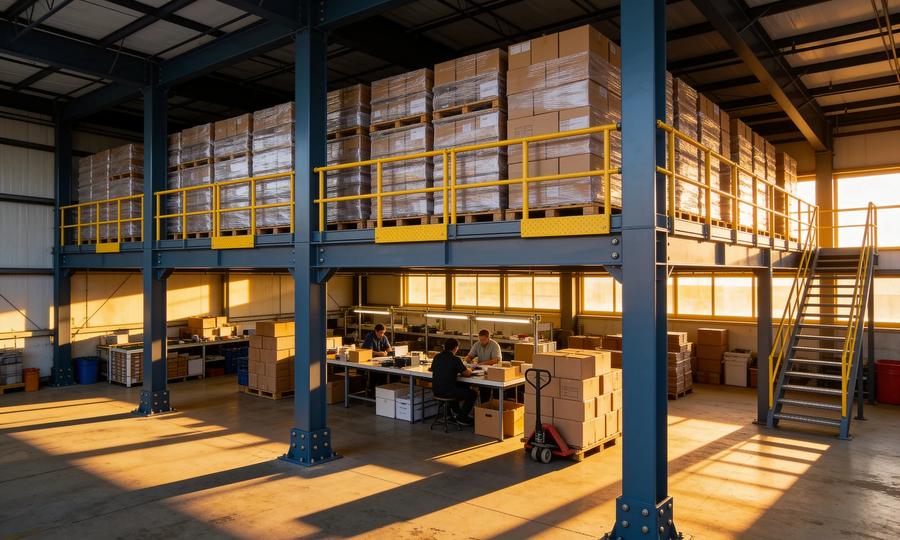
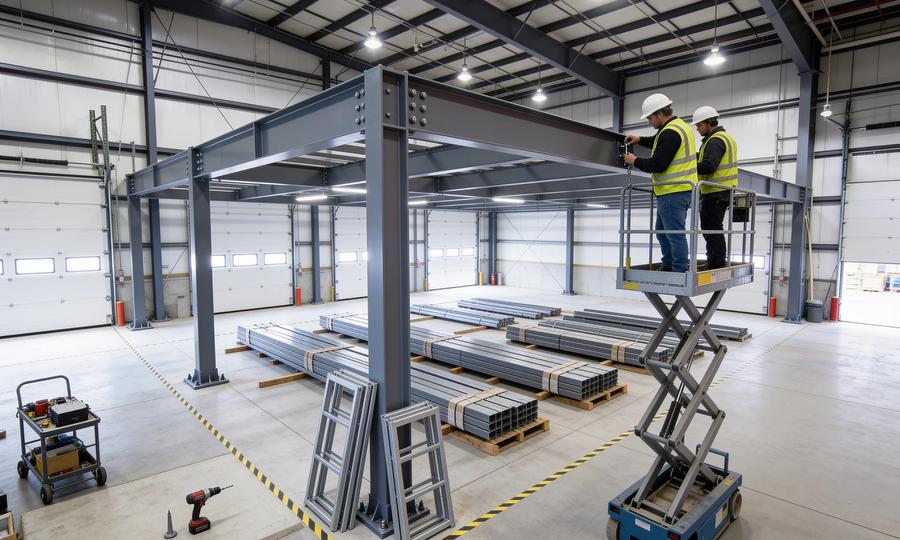
Using current published rates: a mezzanine adds floor at $50–150 per square foot installed, it's up in 2–6 weeks from engineering with a 2–5 day install, and it triggers no new foundation, no new roof, and no real-estate transaction. The constraint is equally clear: it only works if you have the clear height — and under the IBC one-third rule, the deck can't exceed a third of the room it sits in without becoming a story.
The three-way comparison table
For a facility needing ~4,000 sq ft of additional operational floor (computed from the published ranges cited above; budgetary):
| Mezzanine | Expansion (addition) | Relocation | |
|---|---|---|---|
| Capital cost | $200K–$600K ($50–150/sq ft) | $340K–$800K+ ($85–200/sq ft) | $60K–$220K move + TI, then rent forever |
| Ongoing cost | Minimal (inspection) | Property tax/insurance increment | $10–11+/sq ft/yr lease, escalating |
| Time to operational | 2–6 weeks | 6–18 months | 3–9 months typical (site search → move-in) |
| Disruption | Days, localized | Months, alongside operations | Total — everything moves |
| Reversible? | Yes — free-standing units relocate | No | N/A |
When is the mezzanine NOT the answer?
Honesty requires the other column. Choose expansion or relocation instead when:
- You lack clear height. Below roughly 14 ft clear you can't stack two usable levels — see the height math.
- You need dock doors, yard space, or power — a mezzanine adds floor, not building services.
- You're already at the one-third limit or your slab can't take the point loads (load capacity explained).
- The whole operation has outgrown the site — labor pool, truck access, zoning. No amount of interior steel fixes location.
For everything else — storage, pick modules, work areas, offices above the floor — run the numbers first with the cost calculator and the ROI framework. The gap in both money and time is rarely close.
What to read next
- Industrial mezzanine ROI: when does it actually pay back? — the NPV math behind this comparison
- How much does a 2,000 sq ft mezzanine cost in 2026? — pricing the mezzanine column precisely
- The mezzanine installation timeline: week-by-week — what "2–6 weeks" actually contains
- Warehouse space optimization: what to do before you lease more square feet — the interventions to exhaust inside your existing building first
Put this guide into practice
Frequently asked questions
- Is a mezzanine cheaper than expanding a warehouse?
- Usually by a wide margin. Published 2026 comparisons put mezzanines at 50–70% less than a building expansion once foundations, roofing, HVAC, permitting, and lost productivity are counted, and installed mezzanine rates of $50–150 per square foot sit well below the $85–200 turnkey construction range.
- How much does it cost to build warehouse space in 2026?
- Published 2026 figures put turnkey warehouse construction at $85–200 per square foot nationally, with economies of scale: roughly $140 per square foot at 10,000–20,000 sq ft, dropping to $60–80 at 100,000+ sq ft. Regional markets swing the number ±25–50%.
- How much does it cost to rent warehouse space in 2026?
- National average industrial asking rents span $10.18–$11.08 per square foot per year across the Q1 2026 reports from Cushman & Wakefield, JLL, and CBRE. Port-proximate markets carry roughly a 55% premium over that average.
- How much does it cost to relocate a warehouse?
- Published estimates put a typical warehouse move at $25,000–$100,000 for the move itself, before tenant improvements at the new space — typically $15–30 per square foot — and before downtime, re-permitting, and workforce disruption.
- How long does a mezzanine take compared to a warehouse expansion?
- Published manufacturer figures put a mezzanine at two to six weeks from engineering to installed, with the erection itself taking two to five days. A warehouse expansion runs six to eighteen months design-through-occupancy, and typical ground-up builds take twelve to twenty-four months.
Continue planning your mezzanine
All Cost & ROI guides →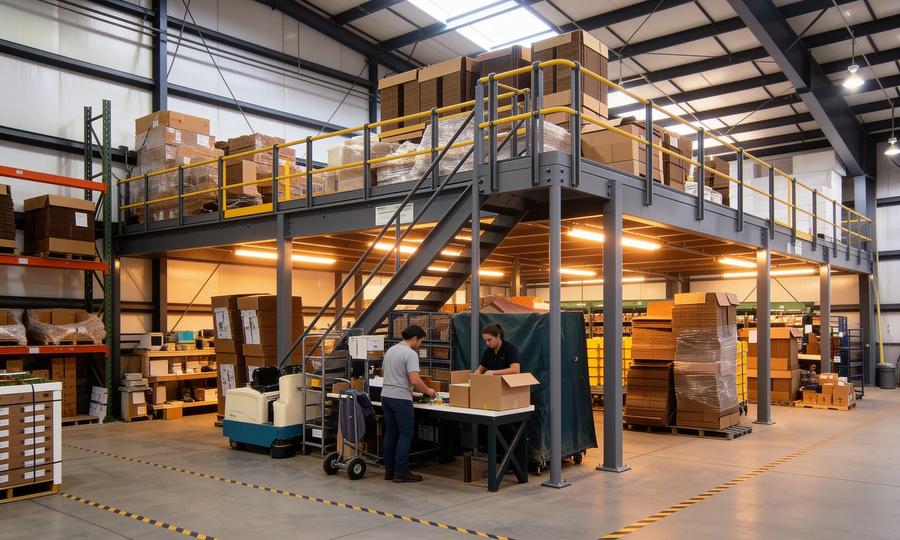
Cost & ROI
How much does a 2,000 sq ft mezzanine cost in 2026?
A 2,000 sq ft industrial mezzanine typically runs $110,000–$180,000 installed in 2026, based on published $50–150/sq ft ranges. Here's the line-by-line breakdown and what moves the number.
Cost & ROI
Industrial mezzanine ROI: when does it actually pay back?
An industrial mezzanine costs $50–150 per square foot installed and competes with options that range from $4/sqft/year (lease) to $250/sqft (new construction). Here's how to run the ROI honestly.
Cost & ROI
Mezzanine Cost per Square Foot: 2026 Budget Guide
Compare mezzanine cost per square foot, project types and quote exclusions. Explore decking, installation and site-work costs, then use the budget calculator.