

Mezzanine depreciation: building or equipment? What the IRS audit guide and the L.L. Bean case actually say
The IRS treats a mezzanine as 39-year building property or as equipment, depending on what it does. The rule text, the L.L. Bean case, and 2025's changes.
Editorial & Engineering Team
This article reports published IRS rules, Treasury regulations and case law. It is not tax or legal advice. Classification turns on facts only your own CPA or tax attorney can weigh, and the IRS guide quoted throughout describes itself as "not an official pronouncement of the law." See our terms of use.
Ask a vendor how a mezzanine is depreciated and you will usually get one answer: it's equipment, so seven years instead of thirty-nine. Several pages ranking for this question say exactly that about free-standing, bolted mezzanines. The IRS's own audit guidance is more conditional. It classifies mezzanines both ways, and the leading court case went against the taxpayer on a rack-supported deck.
This page goes further than the tax paragraph in our mezzanine vs work platform vs catwalk comparison and the depreciation note in mezzanine offices. It lays out the rule text, the case, and what the 2025 law changed, so the conversation with your accountant starts from sources rather than sales copy.
Is a mezzanine a building or equipment for tax purposes?
It depends on what the mezzanine does, and the IRS says so in writing. The Cost Segregation Audit Techniques Guide (Publication 5653, February 2025) puts mezzanines that serve the building into §1250 property recovered over 39 years, and mezzanines built only to reach machinery into §1245 property with a shorter life.
The guide's pharmaceutical and biotechnology matrix sets the two rows side by side. Building property covers "catwalks and mezzanines that provide access to various sections or levels of the building or provide more than incidental working space," "designed to remain in place indefinitely." Personal property covers "catwalks and mezzanines designed and constructed only to provide access to inspect, repair, or operate specific items of machinery or equipment." The auto manufacturing matrix draws the same line. Its building-type mezzanines "are generally designed to remain in place indefinitely, are integrated into the building design, and require substantial time and effort to construct or remove." The equipment-access version goes to asset class 37.11, Manufacture of Motor Vehicles, at 7 years.
The 39 years comes from the statute. 26 U.S.C. §168 sets nonresidential real property at 39 years, straight-line, under the mid-month convention. On the equipment side, the guide notes that "the recovery period depends on the use of the property": it follows the owner's activity class under Rev. Proc. 87-56, not a number assigned to mezzanines. No source can promise "seven years" without knowing the business.
| §1250 building property | §1245 equipment | |
|---|---|---|
| The IRS guide's mezzanine description | Access to levels of the building, or more than incidental working space; designed to remain indefinitely | Built only to inspect, repair or operate specific machinery or equipment |
| Recovery period | 39 years, straight-line, mid-month | Set by the activity class (7 years in the auto manufacturing example) |
| Faster write-off routes | Qualified improvement property and the §179 real property list (below) | Bonus depreciation and §179, which the IRS lists among personal property's benefits |
| Gain on sale | Unrecaptured §1250 gain, taxed at up to 25% | Recaptured as ordinary income |
Why doesn't "it's bolted down, so it's movable" settle it?
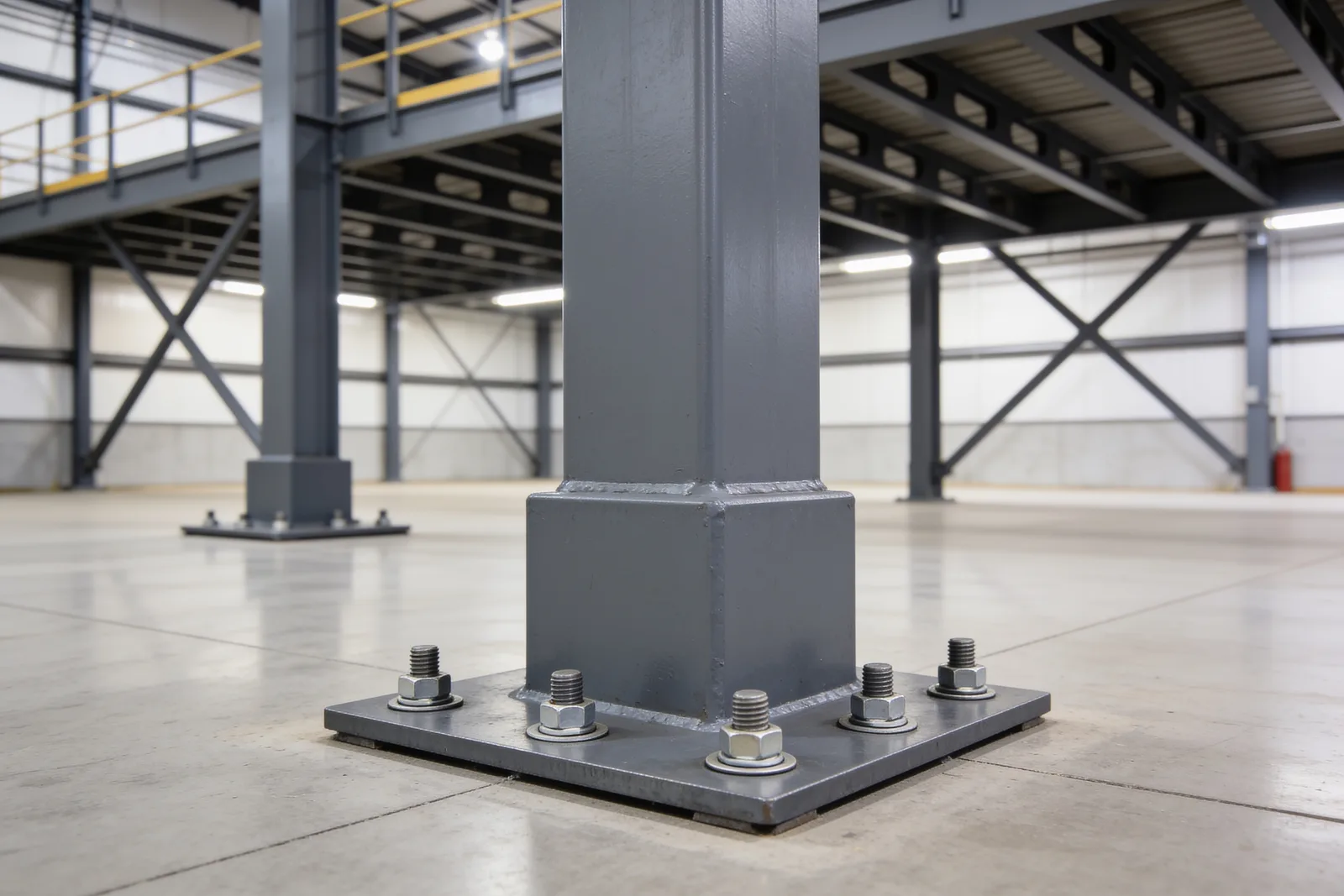
Because the test is inherent permanence, and theoretical movability doesn't decide it. The IRS guide lists six questions from the Tax Court's Whiteco decision, then warns that "movability is not determinative in measuring permanence." A bolted base plate speaks to one of the six, not all of them.
The six questions, as the guide states them:
- Is the property capable of being moved, and has it in fact been moved?
- Is the property designed or constructed to remain permanently in place?
- Are there circumstances "which tend to show the expected or intended lengths of affixation"?
- How substantial a job is removal, how time-consuming is it, and is it "readily removable"?
- How much damage will the property sustain upon its removal?
- What is the manner of affixation of the property to the land?
The guide adds that in L.L. Bean "the court held that the mere fact that a structure is theoretically capable of being moved does not conclusively establish that it is not inherently permanent." The underlying regulation frames the question the same way. Treas. Reg. §1.48-1 excludes "buildings or other inherently permanent structures" from tangible personal property and names "floors" and "stairs" among a building's structural components. It also states that "local law shall not be controlling," so calling the mezzanine a trade fixture in a lease or under state law doesn't settle the federal question.
What did the court decide in the L.L. Bean mezzanine case?
That a rack-supported mezzanine holding up nothing but its own floor was still a structural component. In L.L. Bean, Inc. v. Commissioner, decided May 28, 1998, the First Circuit held that the system was not tangible personal property. The IRS guide's case table lists it as "Mezzanine system (§ 1250)."
The facts look like a modern rack-supported deck. The mezzanine in L.L. Bean's 1986 shipping building was "cantilevered shelving attached to rack posts" with "plywood decking which comprises the mezzanine level." The court accepted that the system "does not itself support the walls or ceiling," but held that it "clearly performs a structural function—primarily that of providing and supporting the mezzanine floor." Removal was estimated at "six to eight workers a little over a month," a figure that "did not include the time necessary to disconnect the electrical wiring, communication cables, sprinkler systems, and duct work."
Two cautions. The dispute was over the old investment tax credit under §§38 and 48 for 1986 and 1987, not modern cost segregation, although the IRS guide relies on the case when it discusses permanence. And the outcome rested on the record for one building. If you're weighing a pallet rack mezzanine or choosing between free-standing and rack-supported designs, note that the structural type doesn't settle the tax question on its own, in either direction.
Can a mezzanine be qualified improvement property?
Only if it is §1250 property to begin with, and the statute excludes three things close to a mezzanine. Qualified improvement property is an interior improvement to nonresidential real property, recovered over 15 years since the CARES Act. It excludes "the enlargement of the building," "any elevator or escalator," and "the internal structural framework."
§168(e)(6) defines it as "any improvement made by the taxpayer to an interior portion of a building which is nonresidential real property," placed in service after the building itself. Treas. Reg. §1.168(b)-1 limits it to "section 1250 property," so a mezzanine properly classified as equipment never reaches the QIP question. Rev. Proc. 2020-25 records the CARES Act fix that made QIP "15-year property." It also made QIP eligible for bonus depreciation when acquired after September 27, 2017 and placed in service after December 31, 2017.
The exclusions are where a building-type deck gets hard. The rehabilitation-credit regulation, §1.48-12, uses the same phrase, "internal structural framework," for "all load-bearing internal walls and any other internal structural supports, including the columns, girders, beams, trusses, spandrels, and all other members that are essential to the stability of the building." A mezzanine is columns and beams. Whether those members belong to the building's framework or form an improvement inside it is the question to put to your advisor. None of the sources we read addresses mezzanines and QIP together.
Does a mezzanine qualify for Section 179?
Equipment can; building property only through the "qualified real property" list. For tax years beginning in 2025 the limit is $2,500,000, reduced by the amount qualifying purchases exceed $4,000,000. For 2026, Publication 946 sets the figures at $2,560,000 and $4,090,000.
§179 covers property "acquired by purchase for use in the active conduct of a trade or business." Publication 946 caps the deduction at taxable income from the active conduct of a business, carries the excess forward, and states that "land and land improvements do not qualify as section 179 property."
The Form 4562 instructions define qualified real property as qualified improvement property plus four improvements to nonresidential real property: roofs; heating, ventilation and air-conditioning property; fire protection and alarm systems; and security systems. A mezzanine isn't one of the four. The fire protection work a new deck often triggers is on the list, and our sprinkler requirements guide explains why that work comes up.
Is a mezzanine eligible for 100% bonus depreciation?
Qualified property acquired and placed in service after January 19, 2025 gets a 100 percent allowance under P.L. 119-21, the 2025 law commonly called the One Big Beautiful Bill Act. Classification still decides whether a mezzanine counts as qualified property: the IRS lists bonus depreciation among the benefits of personal property, and QIP is eligible too.
The dates are acquisition dates, which is where projects straddling the change get caught:
| Placed in service | Acquired | Allowance | Source |
|---|---|---|---|
| 2024 | After September 27, 2017 | 60% | Pub 946 (2024) |
| 2025 | Before January 20, 2025 | 40% | Pub 946 |
| After January 19, 2025 | After January 19, 2025 | 100%, or elect 40% for the first tax year ending after January 19, 2025 | Pub 946; IRS announcement |
The IRS announcement describes the restored allowance as permanent. A deck ordered in late 2024 and installed in 2025 can sit in a different row from one ordered in February 2025. What counts as "acquired" under your purchase contract is a question for your advisor.
Does the new manufacturing deduction apply to a production mezzanine?
Possibly. §168(n) allows 100 percent of the adjusted basis of "qualified production property" in the year it is placed in service, and unlike the rules above it reaches a portion of nonresidential real property itself. It is narrow: the portion must be used "as an integral part of a qualified production activity."
Under Notice 2026-16:
- Construction must begin after January 19, 2025 and before January 1, 2029.
- Placement in service must fall after July 4, 2025 and before January 1, 2031.
- Excluded uses: any portion used for "offices, administrative services, lodging, parking, sales activities, research activities, software development or engineering activities." That puts a mezzanine office outside it by definition, whatever the status of a production deck on a manufacturing mezzanine.
- Recapture: if within 10 years the property "ceases to be used as an integral part of a qualified production activity," §1245 recapture applies.
- Election: it "may not be revoked except with the consent of the Secretary," given "only in extraordinary circumstances." The Form 4562 instructions require a statement attached to a timely filed return.
What happens to the depreciation when a mezzanine is sold or removed?
Gain on sale is recaptured by class, and removal ends depreciation early only through an election. §1245 treats equipment gain "as ordinary income." Per IRS Topic 409, unrecaptured §1250 gain is "taxed at a maximum 25% rate."
Removal is the less obvious half. Publication 946 states that "the retirement of a structural component of real property is not a disposition unless it is a partial disposition." The partial disposition election under Treas. Reg. §1.168(i)-8 must be made "by the due date, including extensions, of the original Federal tax return" for the year of the disposition. Our removal and relocation guide walks through the regulation's worked example. For tenants, Publication 946 is direct: "You can depreciate permanent improvements you make to business property you rent from someone else."

What should a cost segregation study show for a mezzanine?
The IRS guide lists 13 "principal elements of a quality cost segregation study," starting with "preparation by an individual with expertise and experience." It concedes that "there are no prescribed qualifications for cost segregation preparers," but judges a study by a construction engineer "more reliable than one conducted by someone with no engineering or construction background."
The other elements include a detailed methodology, appropriate documentation, interviews with appropriate parties, an explanation of the legal analysis, an engineering take-off, reconciliation of allocated costs to actual costs, and identification of §1245 property. For a mezzanine, the Whiteco questions are physical: how it is anchored, what it supports, how long it would take to remove. The drawings and erection records from construction are the kind of documentation that bears on them. On the return, the pieces land in separate parts of Form 4562: Part I for the §179 election, Part II for the special depreciation allowance, Part III for MACRS.
Where this leaves a mezzanine buyer
Five questions decide the tax treatment, roughly in this order:
- Does the deck give access to the building and working space, or only to a machine?
- How do the six permanence questions come out for this installation?
- When was it acquired and placed in service?
- Does any part qualify as production property?
- Are you the owner of the building or a tenant?
Run the pre-tax numbers first with the cost calculator, the ROI calculator and the ROI framework, then take the sources on this page to your advisor.
Nothing here substitutes for a CPA, tax attorney or qualified cost segregation professional, and none of it is advice. The statutes, regulations, IRS publications and the case are quoted as published. Dollar limits and allowance rates change by tax year, so check the edition that applies to the year you file.
What to read next
- Mezzanine vs work platform vs catwalk: the building-code side of the same classification question
- Industrial mezzanine ROI: when does it actually pay back?: the pre-tax payback math this feeds into
- Mezzanine removal and relocation: the partial disposition election and the rest of end-of-life
Put this guide into practice
Frequently asked questions
- What is the depreciation life of a mezzanine?
- It depends on classification. The IRS Cost Segregation Audit Techniques Guide treats mezzanines that give access to levels of the building or more than incidental working space as section 1250 property recovered over 39 years, and mezzanines built only to reach specific machinery as section 1245 property whose life follows the business activity.
- Is a free-standing, bolted mezzanine automatically equipment for tax purposes?
- No. The IRS guide states that movability is not determinative, citing L.L. Bean, where the court held that a structure being theoretically capable of being moved does not conclusively establish that it is not inherently permanent. The rack-supported mezzanine in that case was held to be a structural component.
- Does a mezzanine qualify for the Section 179 deduction?
- Section 179 covers section 1245 property and qualified real property. For tax years beginning in 2025 the limit is $2,500,000, reduced once qualifying purchases exceed $4,000,000; for 2026 the figures are $2,560,000 and $4,090,000. Whether a particular mezzanine qualifies depends on how it is classified.
- Is a mezzanine eligible for 100% bonus depreciation?
- The 2025 law reinstated a 100 percent special depreciation allowance for qualified property acquired and placed in service after January 19, 2025. The IRS lists bonus depreciation among the benefits of tangible personal property, and qualified improvement property is also eligible, so classification decides the answer.
- Can a tenant depreciate a mezzanine installed in a leased building?
- IRS Publication 946 states that you can depreciate permanent improvements you make to business property you rent from someone else. If the mezzanine is later removed, the partial disposition election in Treasury Regulation 1.168(i)-8 can let a taxpayer recognize a loss, but it has a strict filing deadline.
Continue planning your mezzanine
All Cost & ROI guides →
Cost & ROI
How much does a 2,000 sq ft mezzanine cost in 2026?
A 2,000 sq ft industrial mezzanine typically runs $110,000–$180,000 installed in 2026, based on published $50–150/sq ft ranges. Here's the line-by-line breakdown and what moves the number.
Cost & ROI
Industrial mezzanine ROI: when does it actually pay back?
An industrial mezzanine costs $50–150 per square foot installed and competes with options that range from $4/sqft/year (lease) to $250/sqft (new construction). Here's how to run the ROI honestly.
Cost & ROI
Mezzanine Cost per Square Foot: 2026 Budget Guide
Compare mezzanine cost per square foot, project types and quote exclusions. Explore decking, installation and site-work costs, then use the budget calculator.